

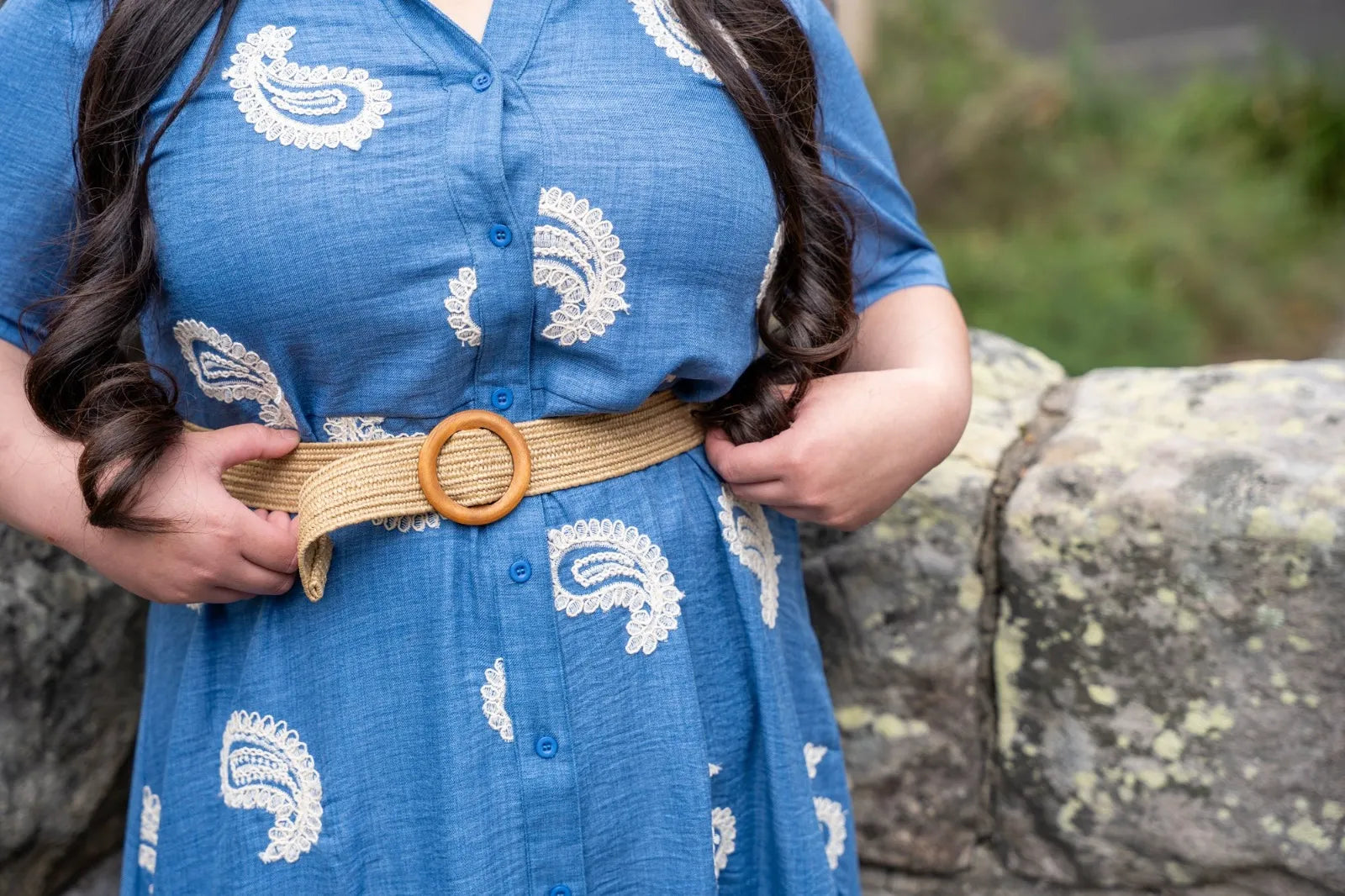
In controlled environments like labs or structured workplaces, clothing is rarely treated as a system variable. Yet discomfort, poor fit, or restrictive garments often interfere with movement, focus, and confidence. Many women end up choosing between function and appearance, which creates a constant trade-off during long work hours.
This becomes more noticeable when a feminine flowy dress looks visually appealing but fails during actual use. It may shift awkwardly, lack support, or feel impractical across a full day. Over time, this mismatch affects posture, ease of movement, and even decision-making confidence.
The solution lies in approaching clothing as a performance layer rather than just a visual choice. A well-selected feminine flowy dress can align with daily demands without adding friction. The sections ahead break down how to make that alignment consistent and practical.
Fabric behavior and daily wear response
A feminine flowy dress performs differently based on fabric composition and structure. Materials like cotton blends and soft linen allow airflow and reduce heat retention, which is critical for extended wear. In contrast, synthetic heavy fabrics may hold shape but often create discomfort over time.
When selecting a feminine flowy dress, the key is to observe how the material reacts to motion. Does it cling during movement or maintain spacing from the body? Does it crease heavily or return to form after sitting? These factors directly impact usability across a full day.
Another layer to consider is how such dresses compare with trendy co ord sets women often choose for structured looks. While those sets offer clear separation of pieces, a feminine flowy dress reduces decision fatigue by functioning as a single unit.
Fit dynamics across varied body types
Volume distribution and movement range
A feminine flowy dress should allow controlled volume rather than excessive fabric spread. Too much volume leads to drag and imbalance, while too little restricts movement.
Length calibration for daily tasks
Length affects walking speed, stair movement, and sitting posture. Mid-length options often provide the best balance between coverage and ease.
Sleeve structure and arm mobility
Sleeves that restrict shoulder rotation reduce efficiency in daily tasks. Open or flexible sleeve designs allow a better range without constant adjustment.
When compared with trendy co ord sets women use for layered styling, dresses simplify mobility since there are fewer elements to adjust during the day.
Layer integration for structured styling
A feminine flowy dress gains functional stability when paired with structured layers. This is particularly useful in environments where temperature or activity levels shift.
Key layering elements include:
-
Light outer layers that maintain airflow
-
Waist definition pieces that prevent fabric drift
-
Footwear that stabilizes posture without restricting movement
These additions create a balanced system where the feminine flowy dress maintains its visual softness while gaining structural support.
In contrast, trendy co ord sets women select often rely on predefined structure, whereas dresses require intentional layering to reach a similar balance.
Visual balance and proportion alignment
A feminine flowy dress must maintain proportion between the upper and lower sections. Imbalance leads to visual distortion and discomfort during movement.
For example, heavier lower sections combined with minimal upper structure can pull the posture forward. Similarly, oversized tops with narrow lower sections create restriction during walking. Achieving proportional balance ensures that the feminine flowy dress supports natural body alignment.
Trendy co ord sets women often rely on symmetry between top and bottom pieces. A feminine flowy dress must achieve that same effect through internal design rather than separate components.
Color selection and daily adaptability
Neutral tones for repeat wear
Neutral shades allow a feminine flowy dress to integrate into multiple settings without appearing repetitive. This increases usability across different days.
Soft contrasts for visual clarity
Using mild contrast within the outfit improves visual structure without overwhelming the overall look.
Color choice also impacts perception during interaction. A feminine flowy dress in balanced tones supports a composed appearance, which contributes to confidence in both professional and casual environments.
Compared to trendy co ord sets women often rotate for variety, a well-chosen dress can serve multiple roles with minimal variation.
Footwear pairing and posture control
Footwear determines how a feminine flowy dress performs during movement. Flat shoes with proper support maintain balance, while unstable footwear can disrupt posture and create fatigue.
Important considerations include:
-
Sole grip for controlled walking
-
Arch support for extended standing
-
Weight distribution to avoid strain
A feminine flowy dress paired with stable footwear allows consistent movement without interruption.
While trendy co ord sets women may rely on sharper footwear choices, dresses benefit from balanced and supportive options that align with daily demands.
Conclusion
Most wardrobe decisions fail not because of appearance but because they ignore daily function. A feminine flowy dress becomes effective only when it supports movement, comfort, and consistency across real situations.
At She’s Limitless, the focus stays on clothing that works with your day instead of against it. The right feminine flowy dress is not about standing out for a moment but about staying confident through every hour.
If your current wardrobe feels limiting, now is the time to reassess. Choose pieces that align with how you actually live. The difference becomes clear the moment your outfit stops demanding attention and starts supporting you. That shift is where real confidence begins.
Frequently Asked Questions (FAQs)
1. Can a feminine flowy dress work for long work hours?
Yes, a feminine flowy dress works well if fabric, fit, and layering are chosen based on comfort and movement needs.
2. Are trendy co ord sets women better than dresses?
Trendy co-ord sets for women offer structure, but dresses provide simplicity and ease when styled correctly.
3. What length is best for daily wear?
Mid-length options usually provide the best balance between movement and coverage.
4. Can one dress be styled for multiple days?
Yes, changing layers and footwear allows a single dress to adapt across different settings.
5. Does fabric choice really affect confidence?
Yes, fabric directly impacts comfort, which influences posture and overall confidence levels.

